by spacegaier | Jan 4, 2015 | News
First off: Happy New Year to everyone!
As the old year starts to slowly fade away in our rear view mirror, we want to look back on what 2014 had in store for Ogre3D and at the same time look ahead what 2015 might bring. So strap in for this ride back to the beginning of last year…
Review of 2014
It all started off with one key event early in 2014 when one well-known (at least in Ogre3D circles) Argentinian fellow joined the team: Matias Goldberg. In the last few months he was (and still is) the driving force behind the efforts to develop the revamped Ogre 2.0 version. Without him that would not have been possible in its current form…or more accurately: It would not have been possible…full stop.
The work on Ogre 2.0 was one of the cornerstones in last year’s efforts, but of course the rest of the team was not sitting around idly, but instead focused on Ogre 1.10. The DirectX11 and GL3+ render systems in particular received a lot of attention and will be among the highlights of this upcoming release. More on that later once we arrive back in the present time on our journey through the last 365 days.
Two other notable technical points are the addition of WebGL support to Ogre3D as well as AZDO work:
WebGL / Javascript (Emscripten): From Ogre version 1.10 on, we officially support WebGL. The respective code has already been pushed to the repository. An online demo can be viewed at http://coderabbit.at/webgl/viewer (with an downloadable offline copy being available on our Sourceforge site) and build instruction can be found under the following link: http://coderabbit.at/webgl/viewer/OgreEmscripten.txt.
AZDO: As part of his Ogre 2.0 efforts Matias has been working on optimizing Ogre3D from an AZDO (Almost Zero Driver Overhead) point of view. For now this only covers the GL3+ render system, but will be extended in the future. A dedicated post from Matias will follow, outlining the changes and improvements in more detail.
Of course all that work on the engine itself only makes sense if there is an active community and eco-system actually making use of it. Some projects to showcase are listed below:
So all in all it was another pretty good year for Ogre3D, but we got quite a few things to optimize and change for 2015…and that is where we are back in the present and “put the pedal to the metal” to jump-start into 2015 and all we have planned for it:
Outlook for 2015
One of the first things we want to finish is the go-live of the new Ogre3D website we have planned. This basically entails a face-lift and getting rid of the slightly annoying ad banners. So stay tuned for that.
Another major step will be the release of two new Ogre versions, namely Ogre 1.10 as well as the first Ogre 2.0 CTP (Community Technology Preview). Once we have set the final dates we will let you know via a blog post as well as where to find further details. This especially pertains to Ogre 2.0 for which we want to set up some dedicated sources of information to help with the upcoming transition once 2.x nears its first stable release.
At the same time, the regular development efforts will continue and as always we encourage everyone to chime in wherever possible, by providing feedback and input in the forums, reporting issues on our JIRA tracker and ideally also help solving those by submitting pull-requests for our official source code repository. Additionally, donations are always welcome as well to help managing the infrastructure costs.
This last point nicely leads to another thing we want to tackle this 2015. Go-live of our CI server (Continuous Integration) for automated testing of Ogre3D. Once this is ready to use, we will announce it here as well in a dedicated post.
We of course also hope to participate again in this year’s GSoC after we did not make the cut last year. The preparation for it will begin soon by opening up the discussion in our GSoC forum section regarding interesting potential projects ideas. If you have one, note it down and join in the upcoming idea discussion.
Lastly, we also plan to do another Ogre User Survey to get some insights into the user base along with its priorities and wishes and some information about the usage of our engine in general. As you already guessed: This will also be covered in a dedicated announcement once we survey is open. Prior to it, we will trigger a public discussion in the forums regarding the questions we want to ask. Feel free to join in if you have questions that might be of interested and that you would like to see included in the survey.
That’s about it in terms of what we have planned right now, but as usual we will have to see how things pan out. As usual let us know what you think in the forums…and then let’s get cracking.
by spacegaier | Oct 14, 2013 | News
Good news! We have just added the v1-9-0RC2 tag (commit) to our repository, indicating that we reached our RC2 milestone. Within the next four weeks we will fix any potential major bugs and will then release it on the the 10th November as “stable” to become the new de-jure Ogre version.
Note: As outlined in this version planning thread, we did not include any results of our GSoC 2013 projects in Ogre 1.9 yet, to not delay it any further. This merge will partially happen in the new version Ogre 1.10 and the rest of it in Ogre 2.0 (see the thread for more details and the reasoning behind it).
Since the Ogre 1.10 branch has now been created (commit), we can also officially share its name: Ogre 1.10 aka “Xalafu”. JIRA has been updated to reflect the new branches and versions as well.
by spacegaier | Jun 7, 2012 | News
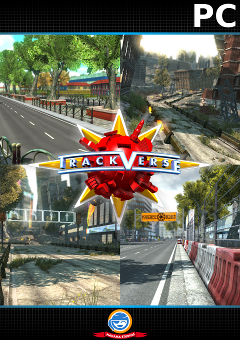
We were just informed that the pre-order period for the new, upcoming, Ogre-powered game TrackVerse has begun with a 50% discount.
Here an extract from their official press release:
 Pre-order link: http://nakama-studios.com/product/g-tv1
TrackVerse (short for Track Universe) is a game about building your own dream tracks and racing on them with friends. Build tracks from different building block themes and each theme will have its own set of matching vehicles/crafts to choose and customize from.
Customize your own racing gameplay rules to make your own race experience unique! Currently in alpha stage version 0.1, TrackVerse is still a work in progress with many more updates and theme packs coming along the way and does not in any way represent the final quality or polish. What you see is what you get. Feel free to provide feedback on helping us improve the game.
As we at Nakama Studios intend to continue releasing more refined builds of the game, we also plan on reducing the discount gradually until we reach the final version and full price of the product. So the earlier you buy, the better value you get!
Thank you for your understanding and support!
Key Features:
Build your track from a variety of theme packs (City theme pack, Post Apocalyptic theme pack, sci-fi theme pack, etc….) each with their own set of vehicles/crafts!
Mix and match different theme packs to create whackier tracks! Your imagination is the limit!
Share and race your track with friends that you’ve built!
Mod your own gameplay race rules (free-for-all, team based racing, etc…) with our gameplay script editor.
Customize your own vehicle external appearances.
What you will get in buying a pre-sales copy:
An early bird discount at 50%! off the final version price.
Private access to close beta release with exclusive updates and new theme packs that will not be available in the alpha version.
Life membership access to the game’s internet discovery portal (beta).
PRE-ORDER NOW AT 50% DISCOUNT!
by spacegaier | Jun 7, 2012 | News
As promised in one of the last blog posts, we were going to publish a draft of our roadmap for Ogre 1.9 and 2.0, once we aligned internally. This moment has now come and we would really like your feedback on whether you agree with the listed items and also comment on their priority from your point of view.
Once this high level planning is completed, we will also need to think about ways to enhance our development processes and how to implement the planned changes in the most smooth way possible. This discussion also has been started partially, but for now we need to set the big goals and then afterwards we can break them down.
So here is the forum thread with planned changes for Ogre 1.9 and 2.0: Roadmap draft for Ogre 1.9 and 2.0
We are really looking forward to your feedback, so we hope to also see you in the discussion!
Your Ogre3D Team
by spacegaier | May 28, 2012 | News
We are glad to announce that we finally were able to release Ogre 1.8 (Byatis) which as of now is the new official, stable Ogre version.
New SDK versions have already been uploaded and all download links are adjusted, so feel free to give it a whirl.
We also want to apologize for the rather substantial delay given that the original estimated release date was beginning of January. Basically seconds before we wanted to release we found some bugs in the samples and felt that this is something that needs to be fixed when releasing a new major version. While tackling those issues, we found a series of related issues and again started fixing them as well. In the end that consumed quite a bit of time, but the bright side is: Almost all samples will now run on all platforms and compilers and Ogre 1.8 has become even better and more stable thanks to all the fixes. So we’d like to mark that as a success.
Nonetheless we of course strive to make the next release cycles much smoother, but considering that this was the first release without sinbad as the leader, we are rather happy with the outcome! And for this we mainly have to thank Kojack, masterfalcon and CABAlistic who did most of the work. Well done!
So what is the plan for the future now?
As you might have seen, there were already some public discussions about the next things to tackle, when we discussed possible GSoC 2012 projects. We internally already started to outline where we want to move in regards to Ogre 1.9 and Ogre 2.0. We still need some days to reach a strong consensus, but once we are at that point, we will inform everybody and put our ideas out there for discussion. Once the community is happy with the plans, we will need to figure out how to best approach the realization of those big challenges in front of us. But with such a great community as the one Ogre is proud to have, we are sure we will be able to get the job done. This time perhaps even in time…
So, as usual: Feel free to chime into the discussions in the forum and share your opinions and ideas. And thanks again to everyone involved in helping Ogre 1.8 become reality!
PS: Unfortunately, we do not have a complete change log this time, but two partial ones, which should give you a rather good overview: Basic changelog in our wiki and changelog in our BitBucket repository.