In a week from now, the next major Ogre powered game will finally be released. We had the chance to get some up-front information and material that we are happy to share here. So what are we talking about?
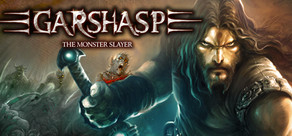
Garshasp: The Monster Slayer
“This game is based on ancient Persian mythology bringing to life the epic battles of the mythological hero, Garshasp, in the ancient lands against the evil monsters. You play as Garshasp himself, the strongest man in Persian Mythology, in a journey to revenge and reclaim the legendary mace of his ancestors which is stolen by the Deevs. A journey which proves to unlock more significant hidden mysteries. The main mechanics of the game revolve around melee combat, platforming and exploration.”
The game was developed and published by the studio “DeadMage“, with a core team of nine people: 3 programmers, one concept artist, an 3D modeler, 2 game designers, one sound guy and an animator. Overall 30 people were ultimately involved in the process. Together they worked on it for 3 years, albeit most of the time part time, since the team members had to make a living or study at the same time.
The also used quite a range of different libarries to get the game done, most notably: OGRE3D 1.6.2, ParticleUniverse, PhysX 2.7.2 (via NxOgre 0.9), Hikari, Boost (Serialization, Threading), CG shaders SM 2.x, OpenAL, FreeSL, OgreVideo and Theora. The CG shaders were used to achieve per pixel lighting, normal/specular mapping, HDR, shadows, vegetation/flag subtle movements, water and hardware skinning.
As for their overall development tools they used Visual Studio 2008, PIX, 3D Max for character design, environment design and animation along with Photoshop, Crazybump and ZBrush. The 3D content was exported by the use of oFusion and OgreMax.
To arrange the assets and create the scenes, they built their own level editor using native C++ and WxWidgets which proved to be a good decision in the long run. They also came up with an own scripting language for their game designers.
So if you are into that kind of game, you should definetly give it a try. You can grab it via Steam or GamersGate.
For more information or news, have a look at the game’s website.
PS: Linux port is in development and they are even considering porting it over to XBLA.
We are very happy to announce that Jim Buck (‘jbuck’ on the forums) has officially joined the Ogre Team. He will mainly take care to establish Ogre in the console area in his new position as Ogre Console Lead.
Jim has been programming in the video games industry since 1996, starting as an employee at Sony and shipping well-known PlayStation franchises such as Twisted Metal and GameDay. His own company, Twitchy Thumbs Entertainment, does contract development, especially in the areas of graphics and porting on most platforms, particularly on consoles, handheld devices, and anyplace where OpenGL has a home. It’s these areas where he feels he can make a contribution as part of the OGRE team.
Google has just released the list with this year’s GoogleSummerOfCode accepted student projects. So it is time for us to welcome the following students on board at Ogre this year:
Andrei Radu (andrei_radu) – mentored by Noam Gat (Noman) – will implementing several modern illumination techniques, that are either related to, or benefit from deferred shading. Most of these have been used in several shipped games, while a couple are still considered ‘bleeding edge’.
John Soklaski (mysterycoder) – mentored by Mattan Furst (Mattan Furst) – will work on Dual Quaternion Skinning which addresses problems commonly associated with the linear blend skinning of animations such as skin collapsing. This technique utilizes dual numbers to extend quaternions to represent both rotation and translation. This allows for an efficient representation of the transformations and for application of low-cost linear blending.
Riley Adams (Praetorian) – mentored by Assaf Raman (Assaf Raman) – will build a visual unit testing framework. Traditional unit testing doesn’t help much in a context like OGRE, given the sheer size and heavy dependence on graphics API’s. The best way of doing tests without needing significant modifications or mock rendersystems, appears to be a visual solution, wherein test screenshots are compared between builds.
Martin Holas (kuxv) – mentored by Steve Streeting (sinbad) – will implement Terrain paging improvements to the Ogre::Terrain component. The project will bring new paging strategy which will try to be more accurate using actual terrain shape visibility from camera.
A big thank you to everyone who applied for a slot this year, but unfortunately had to be turned down. We only have a limited number of spots assigned by Google as well as only a limited number of possible mentors that can pull off the task. Nontheless, we are very grateful for all the great ideas you chipped in and the good discussions that took place. And of course: You are still very, very welcome to tackle your idea, even if not as a GSoC project. Anything from simple patches to huge code base additions are most certainly welcome all the time! If you have any question, feel free to contact us…and apply again next year.
Another big thank you goes out to our mentors who have offered (again) to share their time and expertise to support the projects as good as they can to make it another successful GSoC year for Ogre!
So thanks to all that are involved and best of luck to all participating students!
Here are the summarized most notable events of the last two weeks:
Open Beta of the Ogre powered game Dynastica announced, including a new trailer
iPhone/iPad app called Mini Countryman published in the Apple App Store
Oogst announced that Proun is almost finished and published some proof screenshots
a nice little 3D version of Check called Checkers was released
new release of Gorilla, the a 2D and 3D Overlay replacement system by betajaen, with new shader based materials to increase compatibility with iOS and other graphics API
Vertigo, a new fast paced arcade game has been released to the public
Regarding Google Summer of Code 2011: Ogre has been accepted as a participating organization and the submission period has ended. We are now internally reviewing the applications and will we decide which proposed student projects we can mentor and support. Expect to hear more on this soon.
Finally our very own Betajaen has released his new project: “AmiOgre” a port of Ogre to the Amiga computer.
Google Summer of Code for Ogre is still progressing with some promising proposals. Feel free to add yours, or if you have something small which you want to add to or fix in Ogre now – submit a papercut.
Here are the most notable news from the last two weeks:
Three new versions of Ogre Meshy have been released, so we are now at v1.1
Space Hulk inspired game named Arachnophobia released
First preview of Waveit Webplayer, a web player able to run the Ogre demos inside
First screenshots of Snoogre – an Ogre Snooker game were shown
And one very good news item, fresh of the presses: We just heard that Ogre has been accepted for Google Summer of Code 2011! The discussions on the possible projects have already started here. If you have any ideas or comments, feel free to join us there.