by spacegaier | Jun 9, 2011 | News
As usual, some of the most notable events through the last weeks:
http://www.ogre3d.org/forums/viewtopic.php?f=11&t=64830#p428664
by spacegaier | May 27, 2011 | News
Yet again, we have the great opportunity to share some information about one of the latest notable games created with Ogre3D. This time the guys over at Hammerware were kind enough to give us some technical insights about the development process of their new game called FamilyFarm.
 After their previous project – a rail-shooter named Top Gunner developed for a coin-op machine manufacturer from Asia – the studio decided to also use Ogre3D for their next project. That was then tackled with a small team of only 10 members, but the core team only consisting of three people: one producer/programmer, one pure programmer and a 2D/3D artist. So bottom line: Coding, modeling and texturing was done internally, only artistic work like animations, music, sounds and game design were covered by externals.
 The project itself is programmed in plain C++ without the use of any scripting language. They used a data-driven approach where logic is provided by XML data and SQLite databases. As the author of the game mechanics is a board game designer, they received an Excel file full of tables representing the game rules ready to implement. This file is parsed within initialization of the game (easy thanks to MS Excel 2003 file being just simple XML) and another source of data is the content database. Related to that, they highly recommend using SQLite for such data models as you can dump the DB to text file and rebuilt it after commit/update, create views to analyze content during game balancing (item prices, unlocking and other attributes). Also it is fast, easy to use, etc. Scenario definitions, animals and other not so orthogonal objects are however loaded from XML.
In terms of GUI solutions, they were not able to find a perfect fitting match. They had bad experiences with Flash speed using Hikari in one of the previous projects, but needed something smooth and cute. So they decided to implement their own GUI layer to be able creating animated widgets.
As sound library, they relied on irrKlang, but since there is no binary for 64bit Linux (anytime soon), they used OpenAL-based cAudio for this configuration.
Other libraries they used: Boost (serialization, threads), TinyXML, OgreMax, ParticleUniverse, cURL and Google’s Breakpad (crash dumps). The application is autoupdated on Windows with wyUpdate.
The game runs on all major PC platforms (Windows, Linux, Mac), although they had some hard times regarding X server related issues under Linux.
Tools that were involved in the cretion process include: Olifant (localizations editor), CMake, Subversion, Trac, automatic building by Bitten module, unSigned’s GraphicalInstaller and lots of own Python scripts.
The game can be bought either directly through their website or via a variety of merchants, all listed on the same page. So head over there and check out the demo and if you like it, support this indie studio by buying the whole game.
That’s it for this time. For more questions, please post in the corresponding forum thread.
We leave you with this short quote from the developers at Hammerware:
And respect to community! Almost no bugs in Ogre were sent to our server. It could not be said about Intel developers and GMA drivers…
by spacegaier | May 20, 2011 | News
Here is the latest news from the Ogre community:
- Early alpha of SickBrick was published
- Virtual world creation game LifeON was released as a beta version, with more detailed information coming up soon
- “Should I use Ogre or Game Engine X for my project” wiki article now helps people to decide whether Ogre suits their needs
- A neat Mahjong clone named OGS Mahjong was released as version 0.7
- New version of the WorldForge client as Ember 0.6.1 was published
- First beta of the 3D music player MMiX.Me is now available
That is the news for the last two weeks. If you want your project mentioned in the next news post as well, please PM the OgreNewsBot or send an eMail to  .
.
by spacegaier | May 9, 2011 | News
Here the list of new things that happened throughout the last two weeks:
- First impression from NonLife, a multiplayer world building game, were published
- Unity builds are now possible for Ogre
- The simple scene editor Glue Editor Lite 1.0 was released
- Great new wiki article about deploying applications on different platforms
- Neat, little project Tower of Hanoi made with Ogre and Cocoa was published
- Alienmotion, a new animation middleware inspired by tecnofreak, was released as a beta version
- Google Summer of Code 2011 projects for Ogre were announced
- Ogre finally has an official console lead since Jim Buck joined the team
- A new high profile game made with Ogre named Garshasp was released on Steam and GamersGate
- New maintenance release of Ogre alias Ogre 1.7.3 [‘Cthugha’] has just been uploaded yesterday
by spacegaier | Apr 29, 2011 | Game Highlight, News
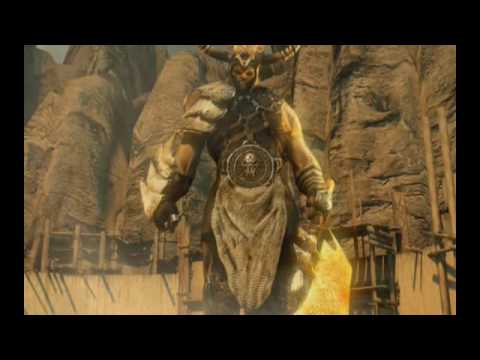
In a week from now, the next major Ogre powered game will finally be released. We had the chance to get some up-front information and material that we are happy to share here. So what are we talking about?
Garshasp: The Monster Slayer
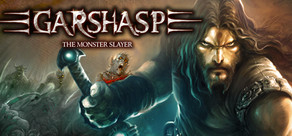 “This game is based on ancient Persian mythology bringing to life the epic battles of the mythological hero, Garshasp, in the ancient lands against the evil monsters. You play as Garshasp himself, the strongest man in Persian Mythology, in a journey to revenge and reclaim the legendary mace of his ancestors which is stolen by the Deevs. A journey which proves to unlock more significant hidden mysteries. The main mechanics of the game revolve around melee combat, platforming and exploration.”
The game was developed and published by the studio “DeadMage“, with a core team of nine people: 3 programmers, one concept artist, an 3D modeler, 2 game designers, one sound guy and an animator. Overall 30 people were ultimately involved in the process. Together they worked on it for 3 years, albeit most of the time part time, since the team members had to make a living or study at the same time.
The also used quite a range of different libarries to get the game done, most notably: OGRE3D 1.6.2, ParticleUniverse, PhysX 2.7.2 (via NxOgre 0.9), Hikari, Boost (Serialization, Threading), CG shaders SM 2.x, OpenAL, FreeSL, OgreVideo and Theora. The CG shaders were used to achieve per pixel lighting, normal/specular mapping, HDR, shadows, vegetation/flag subtle movements, water and hardware skinning.
As for their overall development tools they used Visual Studio 2008, PIX, 3D Max for character design, environment design and animation along with Photoshop, Crazybump and ZBrush. The 3D content was exported by the use of oFusion and OgreMax.
To arrange the assets and create the scenes, they built their own level editor using native C++ and WxWidgets which proved to be a good decision in the long run. They also came up with an own scripting language for their game designers.
So if you are into that kind of game, you should definetly give it a try. You can grab it via Steam or GamersGate.
For more information or news, have a look at the game’s website.
PS: Linux port is in development and they are even considering porting it over to XBLA.