Time to give a progress report:
At the time that I am writing these lines, I am making the final preparations for publicly releasing the AZDO branch aka “Ogre 2.1” (still unnamed as of yet). This doesn’t mean it’s ready / finished, but rather that it becomes public, as there has been a lot of development that has been done behind closed doors.
Good news! We have officially added the v2-0-0RC1 tag to the Ogre repository (commit) indicating that we reached our first Release Candidate milestone for Ogre 2.0!
Our original plan was to tag this release as “CTP” (Community Technology Preview) and the upcoming AZDO (Approaching Zero Driver Overhead) improvements as “final”. However this proved to be very confusing for the community and in fact presented two practical concerns:
v2-0-0RC1 is actually very stable and relatively easy to port to when coming from Ogre 1.9 or Ogre 1.10 (= current unstable default branch). The external API interface is quite similar, with performance benefits from efficient frustum culling and scene graph management (plus it’s multi-threaded). Several users in the community had already started porting to it.
The AZDO branch was going to be labelled as “final”. Even though being quite impressive feature- and performance-wise, it is not complete, cannot be considered stable, and is far from actually being final. Furthermore, porting from Ogre 1.9 or even from Ogre 2.0-RC1 to the AZDO branch is not a trivial task as the external API changes are considerable.
Therefore we concluded that:
The “CTP” branch will be released as Ogre 2.0 and is a good stepping stone for projects that require better performance without the high risk associated with porting when there are big engine changes.
The “AZDO” branch will be released as Ogre 2.1 at some point in the future. External interface changes are quite significant and porting to this version requires more work and inherently results in more risk.
Our main focus of development will be on Ogre 2.1. We will only be providing basic bug fixes for Ogre 2.0 to be able to dedicate more resources to Ogre 2.1.
Note: While more and more focus will shift to Ogre 2.x, we will not immediately abandon Ogre 1.x. In fact, there is still at least one release in the making (Ogre 1.10). Once we have a more concrete timeline for it, we will announce the details.
With this year’s Google Summer of Code already slightly being visible at the horizon it was time for us to get things started again: We are hoping to find a group of capable and motivated students that will help us move Ogre even further. In order to guide this effort, we created a list of potential GSoC projects that we deem most relevant for this year and consider manageable in the given GSoC time frame: GSoC 2015 Project Ideas. There is also a dedicated idea discussion thread that might yield further insights and ideas.
We also collected all the relevant information about how to apply, where to find additional Ogre related information for this year’s GSoC, etc. in this forum thread. Additionally, we have a GSoC wiki section with a dedicated page for this year that we will update as new information becomes available.
We welcome everyone to chime in either with additional ideas or comments regarding potential projects and join the combined efforts to make this one important cornerstone for a successful Ogre year 2015.
On a related note: The so far private Ogre Hlms/AZDO branch will most likely be made publicly available around the end of this week. This of course is needed for the related GSoC idea to be possible.
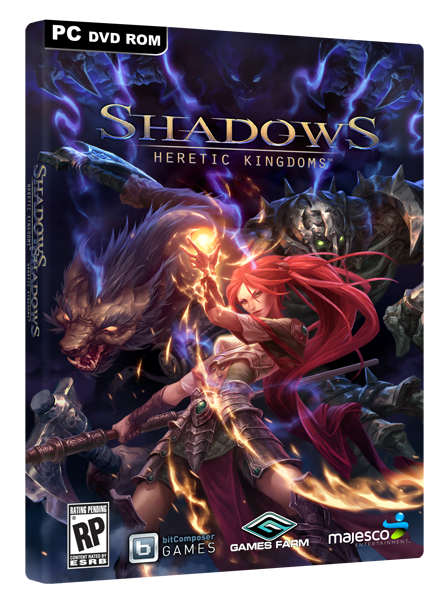
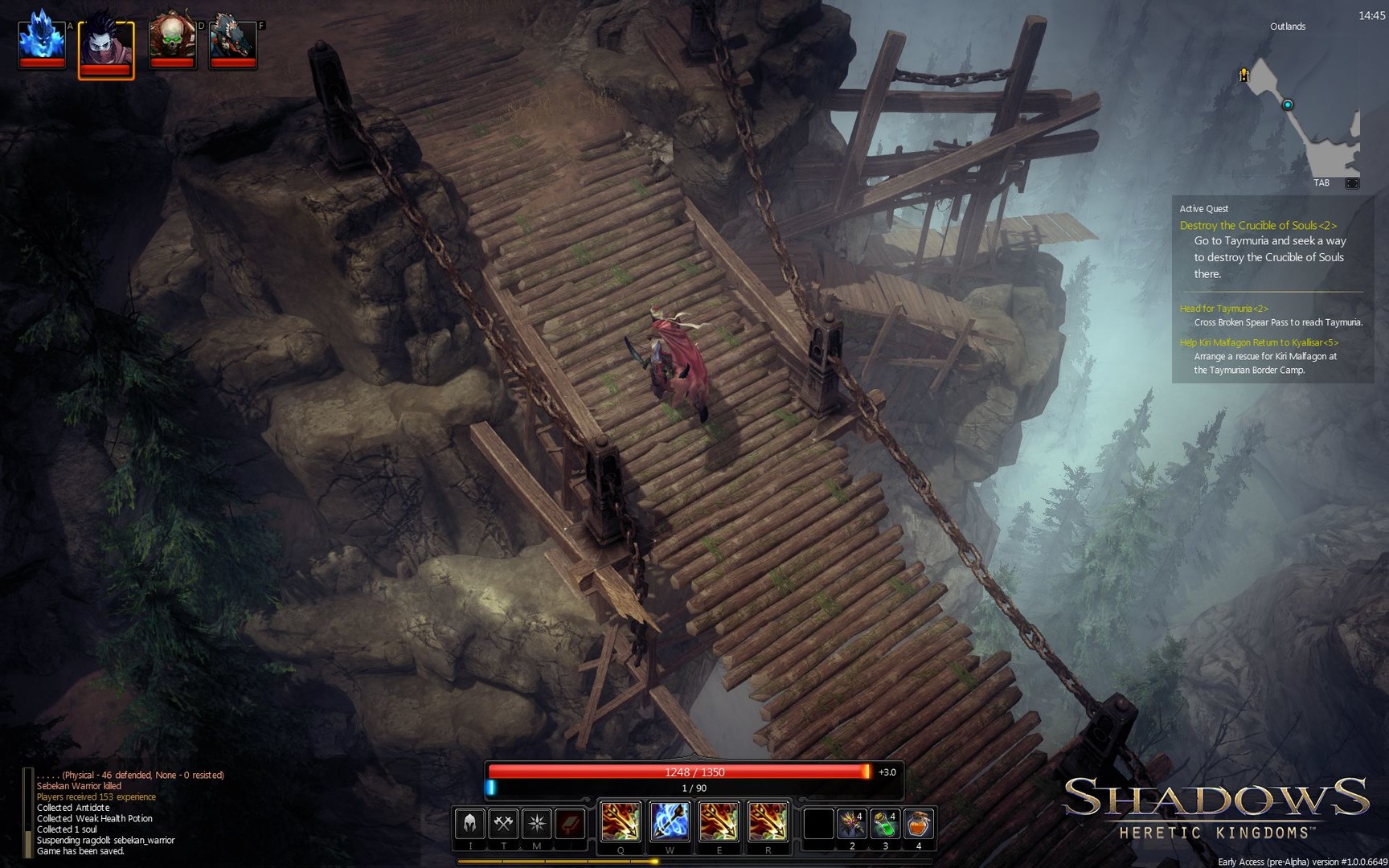
Once again, we want to highlight one of the many games based on Ogre3D that have come out recently. This time: “Shadows: Heretic Kingdoms“.
As usual we asked the team behind the game if they could share some insights into the Ogre3D usage and how the game was built in general, and the guys from bitComposer were kind enough to provide those:
The game was developed on an older Ogre version, but continually upgraded to the most recent versions (currently 1.10). We are thrilled to get the game to Ogre 2.0 though as there are some limits which we are not able to overcome with the 1.x versions (mostly related to hyper-threading and slow scene management).
Apart of a few bugs fixes we have not made any modifications to Ogre core. However, we are using some extensions of shader rendering pipeline. To be more specific, we have modified deferred shading with cubemaps projected lights, added off-screen particles, outlines glow and color correction to name the biggest changes.
We are supporting both DirectX 9 and DirectX 11 renderers. DX11 was included because of the improper detection of graphics cards on some computer with multiple graphics cards with DX9 version.
For 3D modelling, animation and export we are using Maya. Some outsources create their models in 3D Studio and we import those into Maya environment and export into the games.
We have developed our own editor which we are using for scene assembling which includes ragdoll editors, lightning.
For particle effects we are using Particle Universe with in-game editor for seamless implementation of particles to the game environments.
For physics simulation in Shadows we have used the Bullet library (mostly for collisions and ragdolls).
Scripting is done using LUA language. A lot of external files are XML formatted.
For text content handling (there is a lot of text content as you can imagine) we are using our own proprietary tool Locedit which is also available for 3rd parties if someone may be interested in. It features multiple languages, Unicode, subtitler for movies, XLS export/import, voice check and direction, etc.
Game content is encrypted and packed to improve loading times.
User generated content is planned to be distributed using Steamworks.
The entire toolset will be released for the community together with the game sometimes in the near future. We believe that Ogre community may benefit from our tools even for their own projects… It certainly will lack the polish and proper documentation of Unreal but it likely may be the most complex tool for Ogre and available for all Shadows owners without any additional fee.
We are currently starting porting of Shadows to Ogre 2.0 together with the Ogre team, so I hope our work will contribute to early availability of complete 2.0 version of Ogre.
You can see more videos and screenshots on Steam where you of course can also purchase the game: Shadows Heretic Kingdoms @ Steam
Below a first look at the editor that was used for the game and is planned to be released to the public in the near future: